The "15th Five-Year Plan" outline proposes to cultivate and expand emerging industries and future industries. At present, a number of frontier fields in our country are entering a critical stage of accelerating breakthroughs and cluster development. New displays covering various technical routes such as LCD, OLED, and holographic displays are one of the important emerging industries in my country and are widely used in smartphones, computers, TVs, and wearable devices. What new horizons have been opened in front of us by the small size of the screen?
Integrating multiple chips into small lamp beads is far more difficult than engraving words on rice
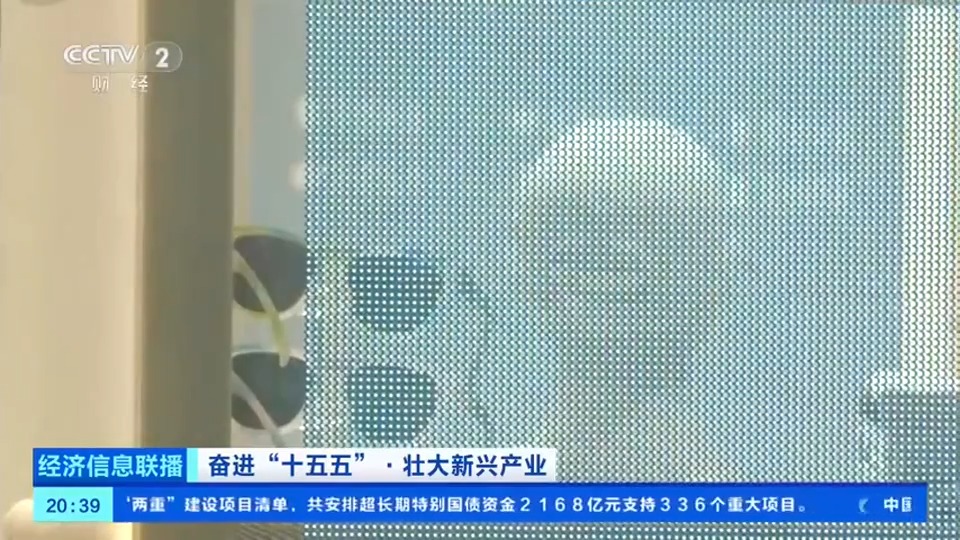
CCTV reporter Ning Kun: Nowadays, everyone is no longer unfamiliar with the various LED screens around us, but have you ever seen a holographic invisible screen like this? It is installed on the glass exterior wall of a store in the mall and is mainly used for the display of advertising videos. This 6-meter-wide screen is actually composed of nearly 1.18 million small lamp beads. Through the pictures on the screen, you can also see the scenes opposite each other inside and outside the store.
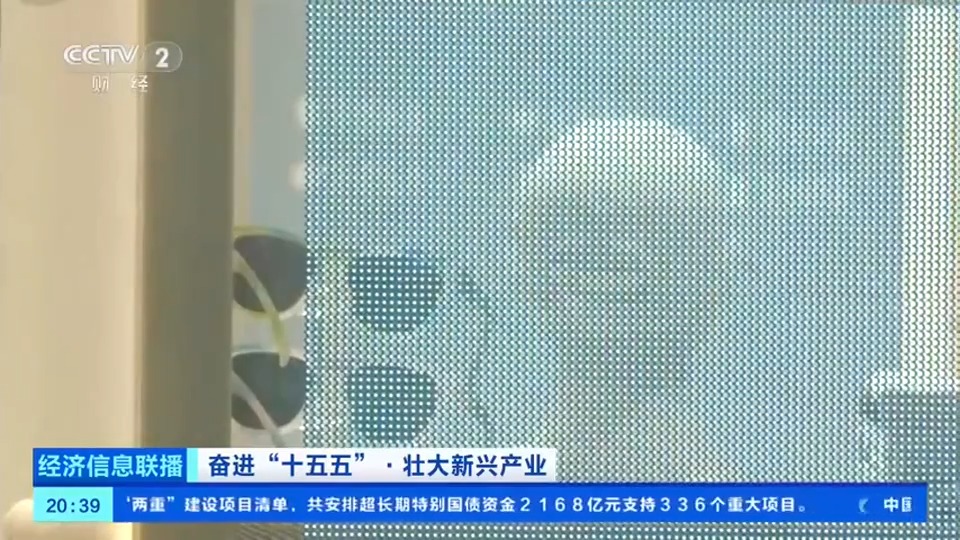
This is a large-area, non-splicing structure transparent LED display pioneered by a company in Shenzhen, Guangdong in the world. Small lamp beads are strung at appropriate intervals to form a mesh panel, which has the characteristics of naked-eye AR visual effects, high brightness, and high contrast.
Hu Xuande, Marketing Director of Shenzhen Micro Vision: The distance between the display lamp beads on this screen is 3.91 mm, and the sensory transparency test reached 92% to 97%. When used in commercial spaces, it has a high-definition and bright display screen without blocking the lighting from the outside in.
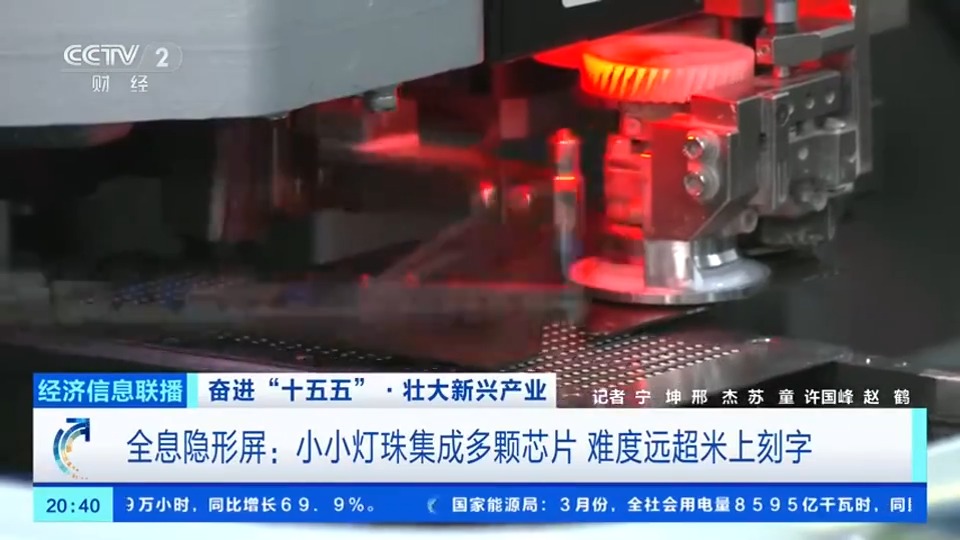
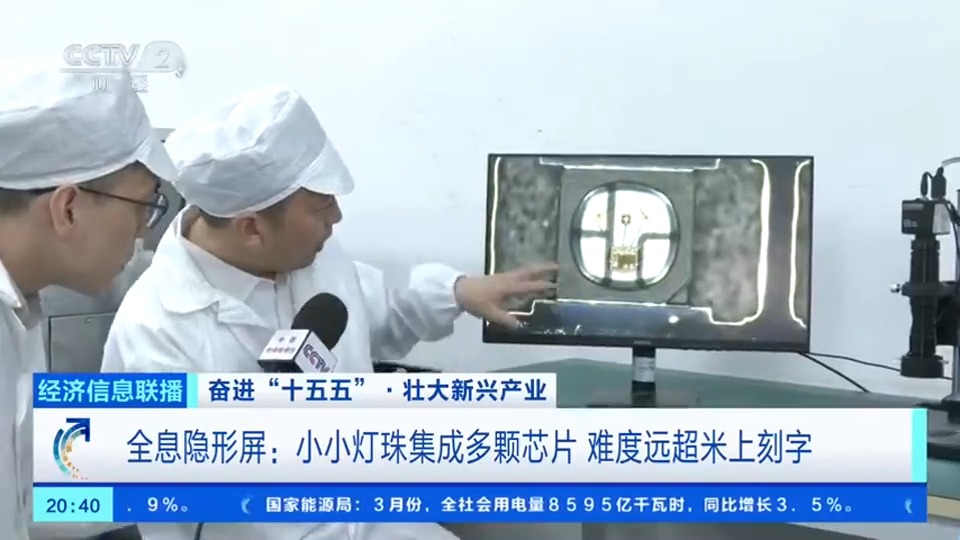
The key to this technology is hidden in seemingly simple small lamp beads. After magnifying the microscope 100 times, you can see that 4 to 5 chips for control and lighting can be integrated into a small lamp bead.
Chen Du, general manager of Shenzhen Meisi Micro Vision, said that it took them just over three years to achieve sales of this product to about 400 million yuan, with an annual growth rate of 35% to 40%. The new products have also attracted many global buyers, with international orders accounting for 60-70%.
The market is also growing rapidly, and there are micro displays specially used for smart wearable devices such as AR/VR glasses. In Hefei, Anhui, the world's first silicon-based OLED micro-display device production line focusing on 12-inch wafers is in busy operation. A 12-inch wafer can be cut into more than a hundred thumb-sized high-resolution microdisplays.
He Yi, Marketing Director of Shiya Technology: It can be said that it adds a layer called "digital retina" to our future digital life, allowing us to see more virtual digital information outside the real world.
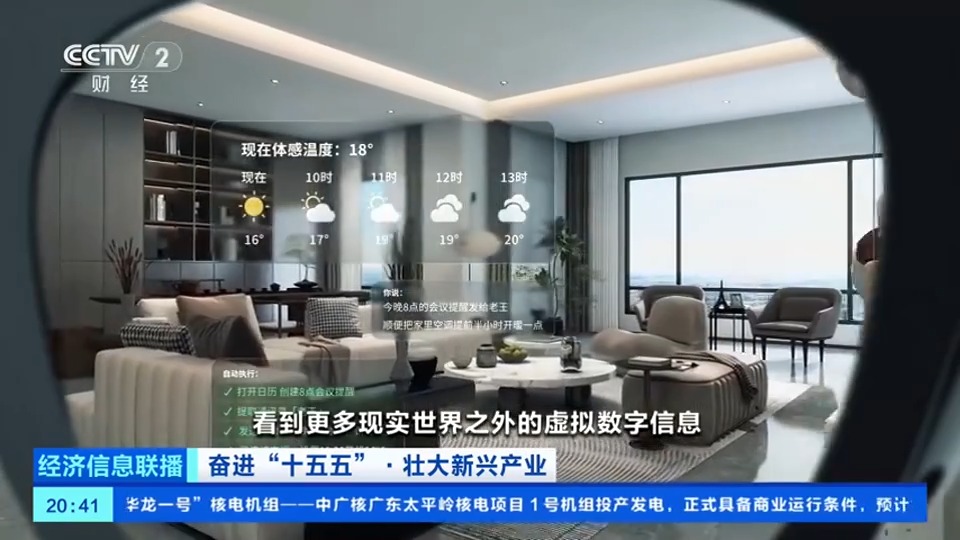
Currently, a variety of micro-display screens of different sizes developed by this company have reached mass production levels. However, there are only two companies in the same field in the world that can ship large quantities to the consumer market.
my country's new display industry has gathered momentum, and the total output value has exceeded 800 billion yuan
In addition to various new and unique products, a variety of new display technologies currently used in consumer electronics, commercial displays and other fields in China have gradually entered a critical stage of concentrated expansion, with large investments and new projects being implemented one after another. Driven by the scale effect, new display positive polychains are gaining momentum.
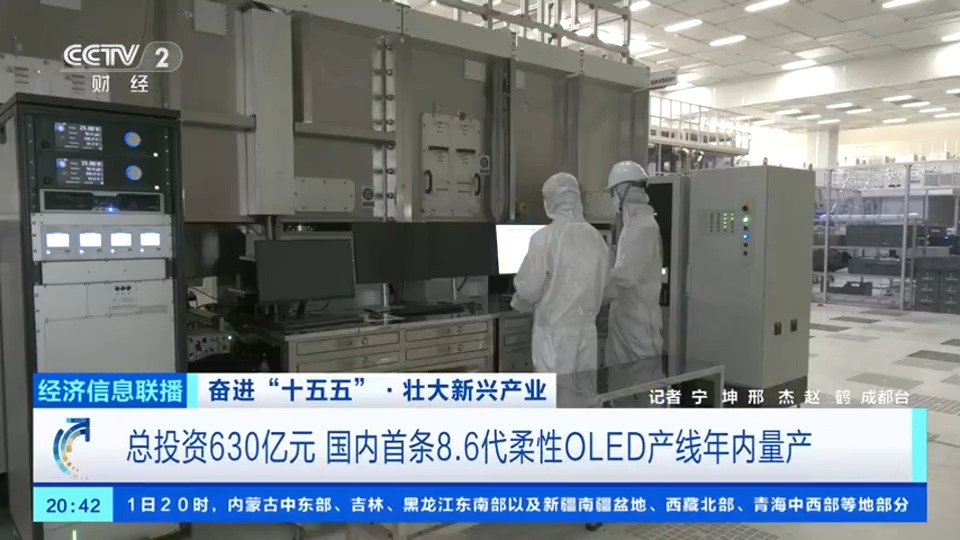
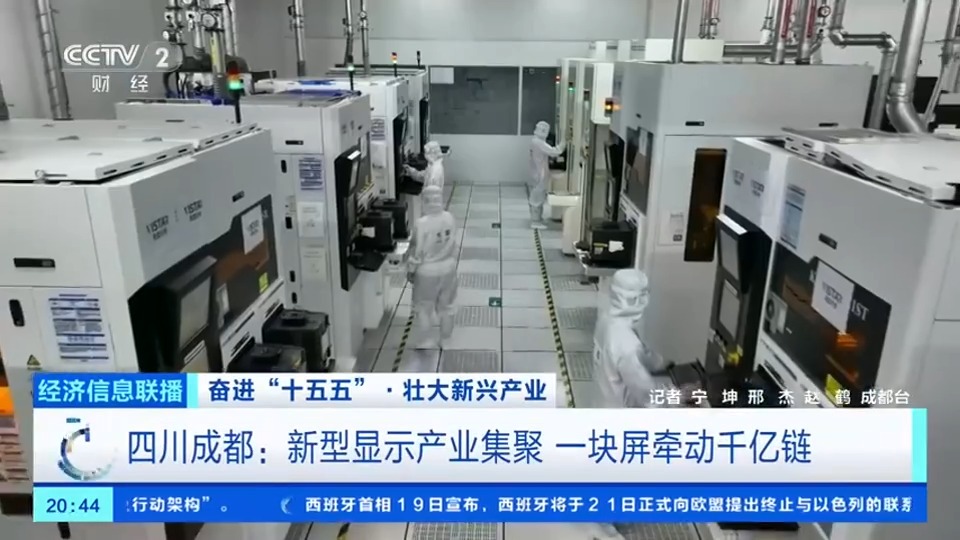
CCTV reporter Ning Kun: China's first 8.6-generation flexible OLED production line is located in Chengdu, Sichuan. Walking into the production workshop, we saw that most of the equipment is now in place and entering the trial production stage of samples. I also learned that within this year, full-scale mass production will begin here.
It is understood that the designed production capacity of this new intelligent production line can reach 32,000 glass substrates per month. Compared with the current mainstream 6th generation line, it is more suitable for cutting medium-sized panels.
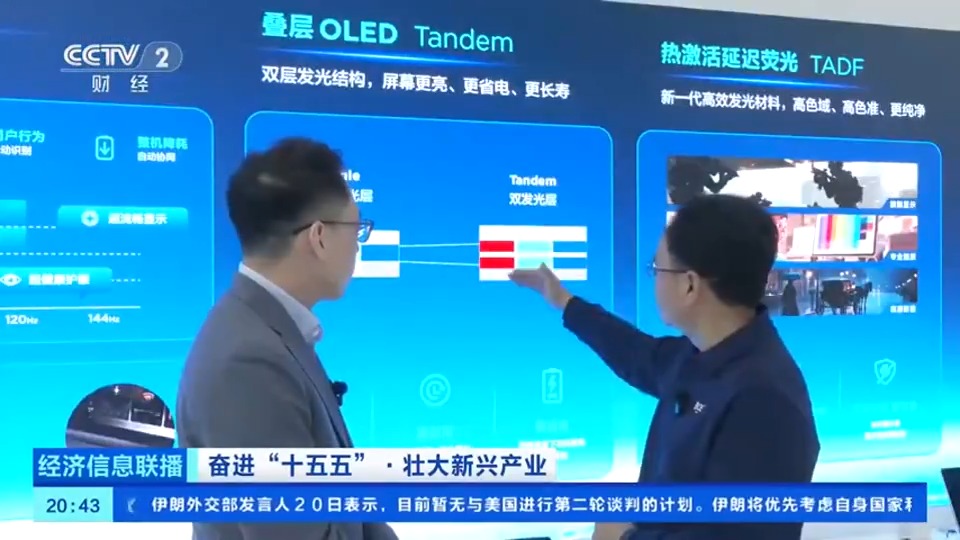
Senior Vice President of BOE Chen Jianjun: The substrate size of the 8.6-generation line is 2.1 times that of the 6-generation line. Many notebook screens are 14 to 16 inches in size. The cutting efficiency of the 8.6-generation line is about 10% higher than that of our 6-generation line, which can effectively reduce the processing cost and overall cost of a single chip.
Chen Jianjun said that currently flexible OLED screens are more used in small-screen devices such as mobile phones. In the future, more mid-to-high-end notebooks and tablets will also be able to use flexible OLED panels, bringing better visual effects. This new project is the fourth AMOLED production line they have invested in and built in the Sichuan and Chongqing regions.
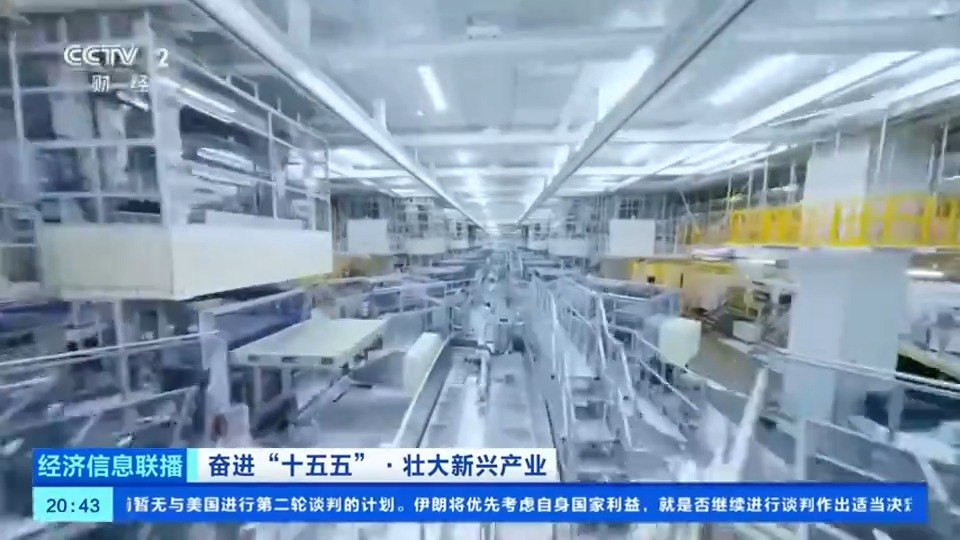
Just about 3 kilometers away from this project, another new display company invested 3 billion yuan to build a production line. This year, its production capacity has also entered a stage of rapid climbing. The world's first 270-inch 8K TFT-based Micro-LED screen developed by the company is made up of 800 small screens. Compared with existing LED screens, it has smaller seams, lower power consumption, and does not get hot. The application scenarios can cover the needs of different sizes.
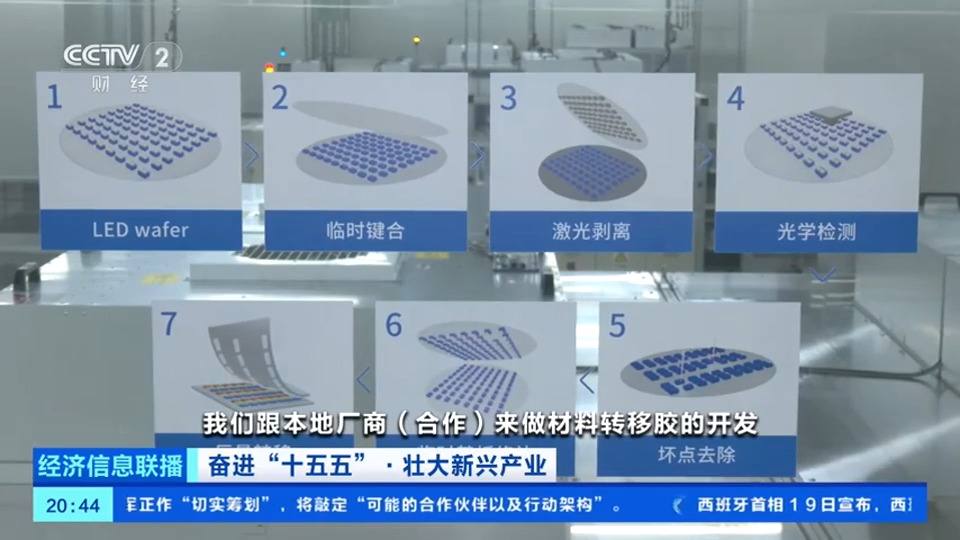
General Manager of Chenxian Optoelectronics Huang Xiuqi: Traditional technology requires an IC (chip) on the back to control the pixels on the front, so the number of traditional LED driver ICs (chips) is particularly large. If compared with previous products, power consumption can be reduced by 20% to 30% year-on-year.
Huang Xiuqi said that in the past seven years, they have developed a technology called "mass transfer", which can transfer millions or tens of millions of LED chips grown on wafers to the backplane in batches at one time.
At present, Chengdu has built a full chain system of materials and equipment, display panels, and terminal applications. In 2025, the scale of Chengdu's new display industry will exceed 100 billion yuan.
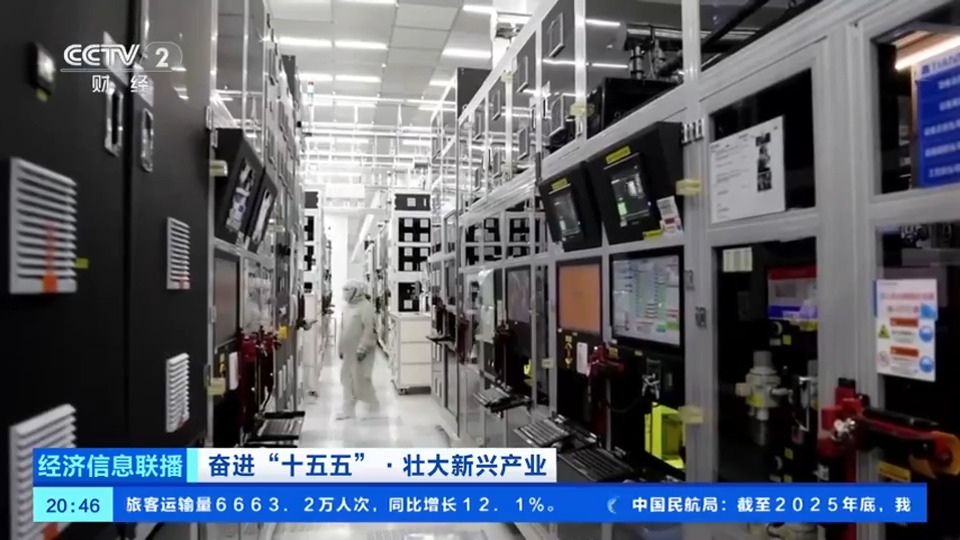
Looking across the country, new display industries in many places are also gathering momentum and rising rapidly, and have formed four major agglomeration areas: the Pearl River Delta, the Yangtze River Delta, the central and western regions, and the Beijing-ring region. In 2025, the total output value of my country's new display industry will exceed 800 billion yuan, and the global market share will increase to 54%.