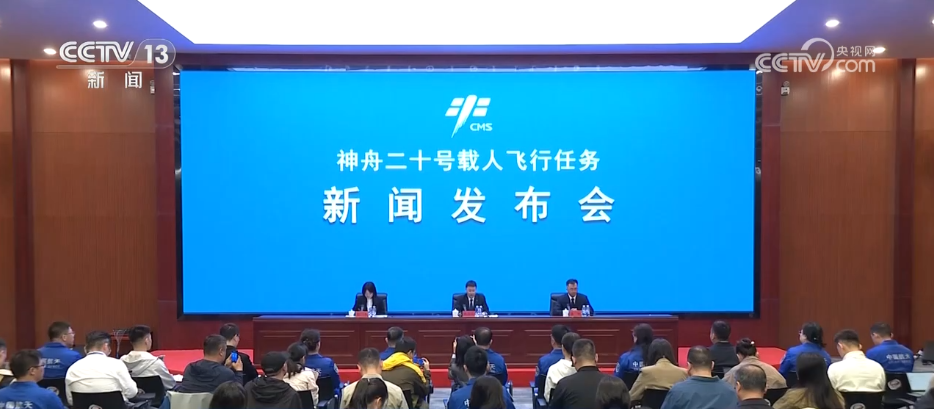
CCTV News: On the morning of April 23, a press conference on Shenzhou 20 manned flight mission was held at Jiuquan Satellite Launch Center. Shenzhou 20 manned spacecraft aimed at launch at 17:17 on April 24. At the press conference, Lin Xiqiang, spokesperson of China's manned space flight engineering, said that as of now, my country has successfully implemented 20 astronauts' out-of-cabin activities, and my country's astronauts' out-of-cabin activities have achieved a leap from technical verification and simple operation to complex operation tasks.
The spokesperson introduced that as of now, my country has successfully implemented 20 astronauts' out-of-cabin activities. The tasks can be divided into four categories: First, verify relevant technologies, including key technologies for out-of-cabin space suits, airlock compartments, robotic arm assisted operation and collaborative support for the world and space. The second is to carry out external cabin assembly, complete the installation of extra-cabin expansion pump sets, extra-cabin load exposure platform support rods, extra-cabin panoramic camera brackets, and cross-cabin cable connection, achieving the complete design function of the space station. The third is to implement extra-cabin maintenance. In response to the damage caused by the space debris impact of the solar wing cable of the space station sky and core cabin, my country's first extra-cabin maintenance was completed through the astronauts' two out-cabin activities, eliminating the impact of the impact on the solar wing and restoring the power generation capacity. Fourth, we will carry out active protection. In order to ensure the long-term safe and reliable operation of the space station, we will learn from one example and apply it to other aspects in response to the increasingly serious debris impact problem. From passive maintenance to active protection, we will conduct inspections after multiple exits to space debris protection devices, and implement the installation of space debris protection devices, which further improves the space debris response capabilities of my country's space station.
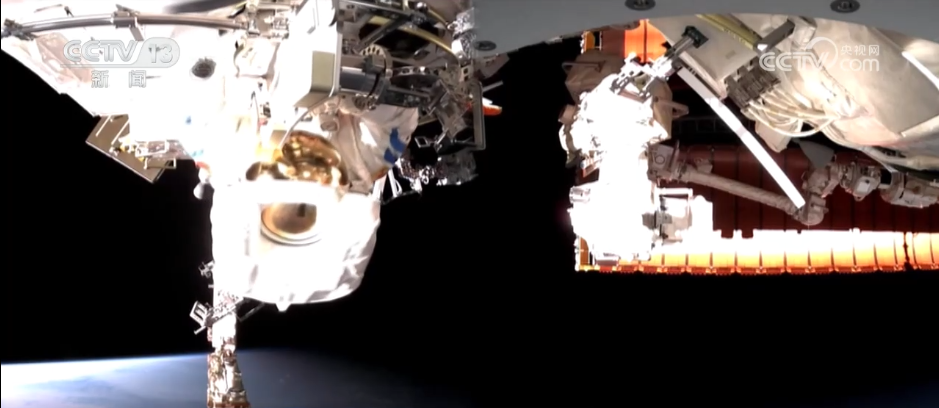
my country's out-of-cabin activity technology is becoming increasingly mature, and its capabilities and levels are constantly improving. It can be said that it has reached the international advanced level at present. For example, the maximum single-time out-of-cabin activity time reached 9 hours, setting a world record; the space suit outside the space cabin of the space station has successfully guaranteed 19 out-of-cabin activities since the Shenzhou 12 mission, and the maximum use of a single space suit has reached 17 times, exceeding the design indicators of "15 times in 3 years", and it still has good performance and stable condition; the robotic arm has achieved the entire area of astronauts' external operations in the space station cabin through its original double-arm cabin and crawling design; the heaven and earth collaborative support system is more perfect, providing effective professional support for the formulation of out-of-cabin activity plan, process control, cross-system collaboration and emergency response.
In general, my country's astronauts' out-of-cabin activities have achieved a leap from technical verification and simple operation to complex operation tasks, and will play a more important role in the long-term operation of the space station.